


Faculty

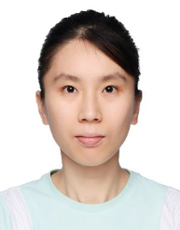
Di Wu
Assistant Professor
Environmental Health
Tel:021-31248931
Email:di_wu@fudan.edu.cn
Address: Department of Environmental Science and Engineering,Fudan University, 2205 Songhu Road, Shanghai 200438, China
Toxic Effects and Molecular Mechanisms of Airborne Contaminants
Immunotoxicology of Emergency Chemical Concern
Development Innovative Organoid Models for Exposure
Dr. Di Wu is an Assistant Professor at Fudan University. Her research focuses on the toxic effects and molecular mechanisms of air pollutants. She is also advancing the development of organoid-based toxicological models to enhance the physiological relevance of in vitro systems for human health risk assessment. Dr. Wu’s work addresses the unequal toxicities of fine particulate matter (PM2.5) by integrating emission source profiling, chemical speciation, and in vitro cellular toxicity assays. Her research has been featured in Nature, Nature Communications, Nature Energy, and Environmental Science & Technology, where she has contributed to shaping the emerging paradigm of toxic potency-adjusted air quality control. Her innovative application of human lung and airway organoids closely mimics the physiological and pathological features of native human tissues, providing a powerful platform for investigating chemical-specific responses at the organ level and bridging the gap between environmental exposure and disease pathogenesis.
Outstanding Oral Presentation at Young Scientists Session of Bioaerosols Conference, 2024
Young scientist award for the first international chemical weather and chemical climate, 2023
Outstanding Postdoc of Fudan University, 2023
Postdoctoral Innovation Talents Support Program, 2022
Excellent doctoral thesis of Fudan University, 2022
Outstanding Graduate of Fudan University, 2021
National Scholarship, National Natural Science Foundation of China, 2019
Selected ones
Zheng, H.#; Wu, D.#; Wang, S.; Li, Q.; Li, X.; Jin, L.; Zhao, B.; Li, S.; Sun, Y.; Dong, Z.; Wu, Q.; Chen, X.; Liu, Y.; Chen, J.; Tian, H.; Liu, Q.; Jiang, J.; Kan, H.; Kebin He, K.; He, H.; Chen, C.; Zhao, J.; Weichenthal, S.; Ji, J.; Cohen, A.; Hao, J., Control of PM2.5 Toxicity Emissions in China. Nature 2025, DOI: https://www.nature.com/articles/s41586-025-09158-w
Su, Y.#; Wu, D.#; Li, Q.; Ding, X.; Chen, Y.; Zheng, H.; Li, Y.; Liu, Y.; Liu, A.; Wang, S.; Cai, R.; Wang, L.; Jiang, J.; Wang, T.; Herrmann, H.; George, C.; Mellouki, A.; Chen, J., Unveiling the intensifying role of significant sulfate formation in industrial plumes in urban air pollution. One Earth, 2025, DOI: https://doi.org/10.1016/j.oneear.2025.101320
Wu, D.; Zheng, H.; Li, Q.; Wang, S.; Zhao, B.; Jin, L.; Lyu, R.; Li, S.; Liu, Y.; Chen, X.; Zhang, F.; Wu, Q.; Jiang, J.; Wang, L.; Li, X.; Chen, J.; Hao, J. Achieving health-oriented air pollution control requires integrating unequal toxicities of industrial particles. Nature Communications2023, 14, 6491.
Wu, D.; Zheng, H.; Li, Q.; Jin, L.; Lyu, R.; Ding, X.; Huo, Y.; Zhao, B.; Jiang, J.; Chen, J.; Li, X.; Wang, S., Toxic potency-adjusted control of air pollution for solid fuel combustion. Nature Energy2022, 7, 194.
Wu, D.; Cheng, A.; Shao, Y.; Huo, Y.; Cai, D.; Wang, Q.; Ding, X.; Liu, A.; Huang, C.; Wang, S.; Zhang, H.; Chen, Y.; Chen, J.; Li, Q., More Than Concentration Reduction: Contributions of Oxidation Technologies to Alleviating Aerosol Toxicity from Diesel Engines. Environ Sci Tech Let2022, 9, 280.
Other ones
Wu, D.; Qi, J.; Li, Q.; Chen, J.; Chen, Y.; Chen, J., Extreme Exposure Levels of PCDD/Fs Inhaled from Biomass Burning Activity for Cooking in Typical Rural Households. Environ Sci Technol2021, 55, 7299.
Wu, D.; Li, Q.; Shang, X.; Liang, Y.; Ding, X.; Sun, H.; Li, S.; Wang, S.; Chen, Y.; Chen, J., Commodity plastic burning as a source of inhaled toxic aerosols. J Hazard Mater 2021, 416, 125820.
Wu, D.; Ding, X.; Li, Q.; Sun, J.; Huang, C.; Yao, L.; Wang, X.; Ye, X.; Chen, Y.; He, H.; Chen, J., Pollutants emitted from typical Chinese vessels: Potential contributions to ozone and secondary organic aerosols. J Clean Prod2019, 238, 117862.
Wu, D.; Li, Q.; Ding, X.; Sun, J.; Li, D.; Fu, H.; Teich, M.; Ye, X.; Chen, J., Primary particulate matter emitted from heavy fuel and diesel oil combustion in a typical container ship: characteristics and toxicity. Environ Sci Technol2018, 52, 12943.
Wu, D.; Low, W.; Li, D.; Chen, J., Chemical characterization and toxicity assessment of fine particulate matters emitted from the combustion of petrol and diesel fuels. Sci Total Environ2017, 605, 172.
Zheng, L.; Wu, D.*; Chen, X.; Li, Y.; Cheng, A.; Yi, J.; Li, Q.*, Chemical Profiles of Particulate Matter Emitted from Anthropogenic Sources in Selected Regions of China. Sci Data 2024, 11, 1206.
Liu, Y.; Wu, D.*; Yi, J.; Chen, X.; Shao, Y.; Chen, J.; Li, Q.*, Unequal Health Risks of Integrated Volatile Organic Compounds Emitted from Various Anthropogenic Sources. J Geophys Res: Atmos2023, 128, e2023JD038594.

Address: Environmental Science Building, Jiangwan Campus, Fudan University, No. 2005 Songhu Road, Shanghai
Phone: 021-31248999
Postal Code: 200438
Email: hjxbgs@fudan.edu.cn
Copyright © Department of Environmental Science and Engineering, Fudan University